What IVF Is
IVF is a laboratory-assisted treatment in which eggs are retrieved from the ovaries, combined with sperm in a laboratory, and one or more resulting embryos are placed in the uterus. IVF is one of several fertility treatment pathways and is recommended based on individual evaluation.
When IVF May Be Considered
- Blocked or absent fallopian tubes.
- Severe male-factor infertility (often with ICSI).
- Diminished ovarian reserve or advanced reproductive age.
- Endometriosis or unexplained infertility after other treatments.
- Need for preimplantation genetic testing.
- Use of donor eggs or donor sperm; LGBTQ+ family building.
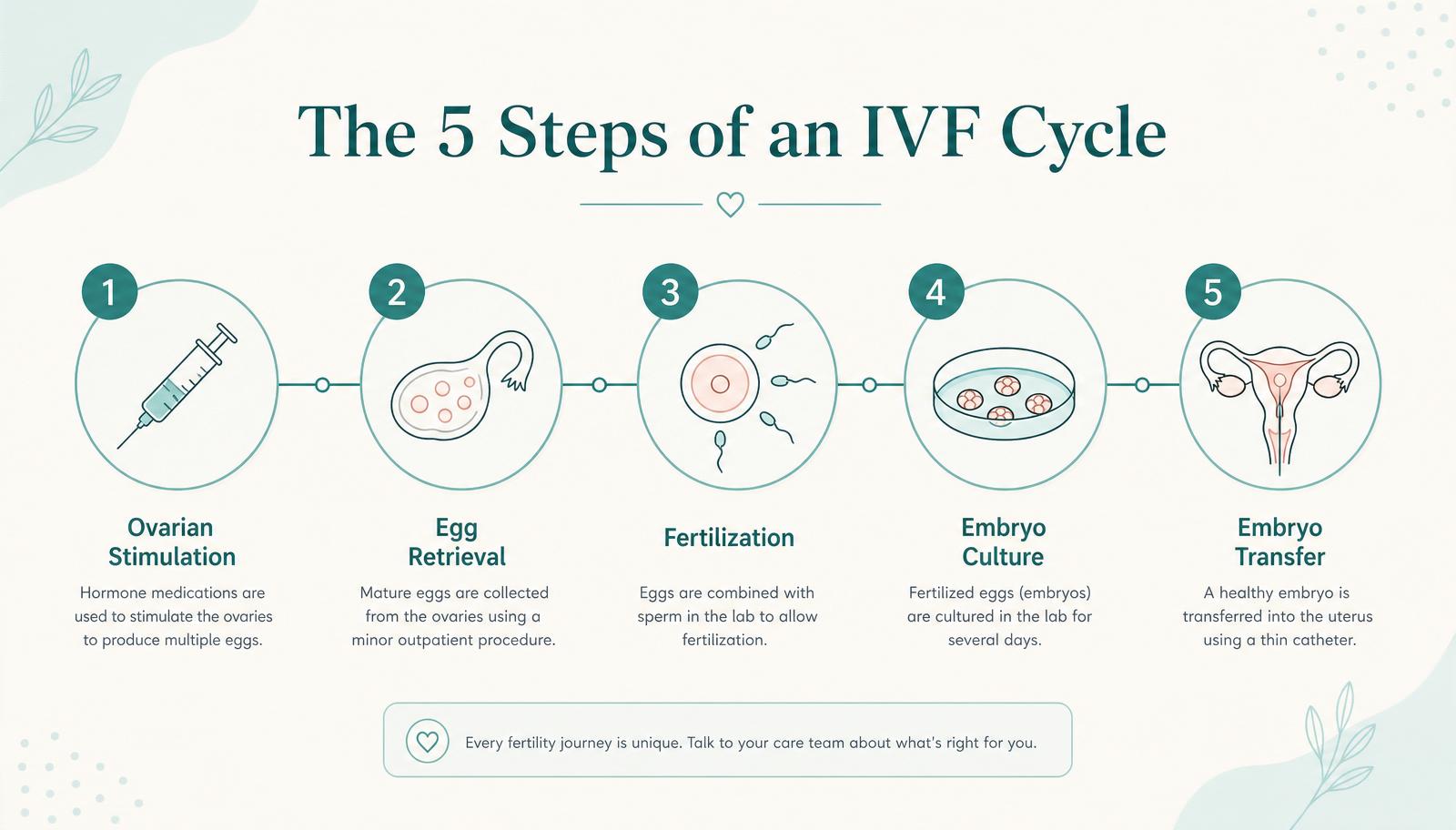
The Cycle in Five Steps
- Ovarian stimulation with injectable medications, monitored by ultrasound and bloodwork.
- Egg retrieval, a brief outpatient procedure under light sedation.
- Laboratory fertilization (conventional IVF or ICSI).
- Embryo culture for several days, sometimes with genetic testing.
- Embryo transfer — fresh or frozen — followed by a pregnancy test about two weeks later.
What "Success" Means
Success rates can be reported in many ways — per cycle, per transfer, or cumulatively. They depend heavily on age and diagnosis. No cycle, at any clinic, guarantees pregnancy or live birth.
Next Steps
If you are considering IVF, an evaluation with a fertility specialist is the appropriate next step. Educational reading can help frame your questions but cannot replace clinical judgment.