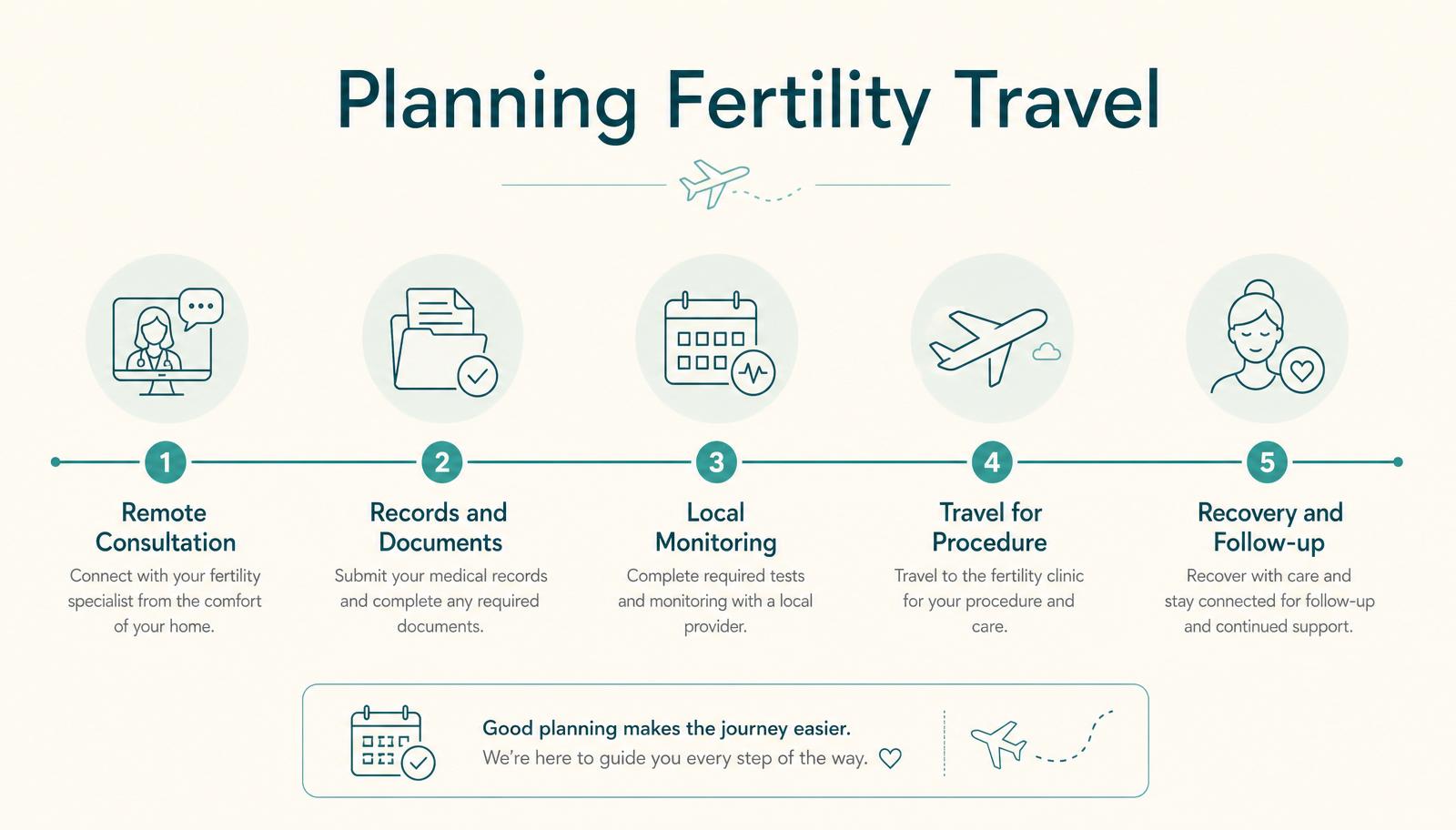
Documents to Prepare
- Valid passport and any required visa.
- Photo ID suitable for the border crossing you plan to use.
- Copies of prior medical records, imaging, and lab results.
- Travel insurance and home-country coverage details.
Coordinating Monitoring
For IVF, some stimulation monitoring can often be performed locally in your home country and shared securely with the destination clinic, reducing the number of in-person travel days.
Timing Around Procedures
- Egg retrieval is a brief outpatient procedure; most patients are advised against long-haul travel the same day.
- For fresh embryo transfer, a short local rest period is typically advised before flying.
- Frozen embryo transfer cycles can sometimes be scheduled with fewer in-person days.
Companion and Support
Bringing a partner, family member, or friend is generally recommended for procedure days. Coordinators can assist with translation, scheduling, and logistics.
Important Reminder
Travel planning should support — not drive — clinical decisions. Follow your specialist's individualized instructions about activity, flying, and medications.