Biological Changes
Both egg quantity and quality decline with age, with a steeper drop after 40. Miscarriage rates and chromosomal abnormality rates rise. These are population-level trends; individual variation is wide.
Evaluation
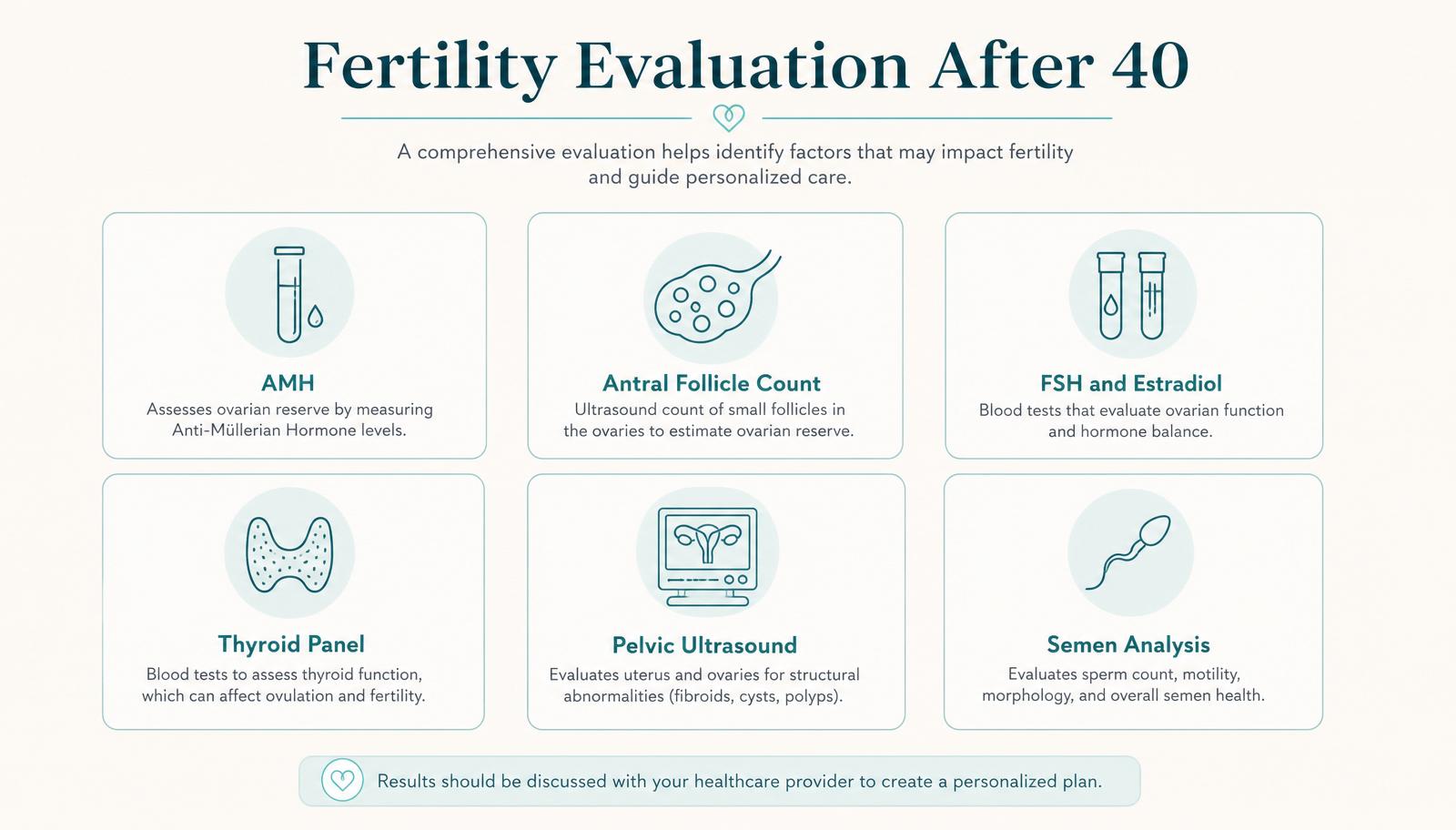
Workup typically includes AMH, antral follicle count, FSH/estradiol, thyroid testing, pelvic ultrasound, and partner semen analysis. A specialist may also recommend genetic carrier screening.
Pathways That May Be Considered
- Timed intercourse or IUI in select cases.
- IVF with own eggs, often paired with discussion of PGT-A.
- Donor egg IVF, often discussed when ovarian reserve is significantly reduced.
- Donor embryo, where available.
Realistic Expectations
Cumulative live-birth rates per cycle with own eggs decline with age. Donor egg cycles follow the donor's age profile. No treatment can guarantee outcomes. Discuss reasonable expectations with a fertility specialist who has your full workup.
Pregnancy Health
Pregnancy after 40 has higher risks of gestational diabetes, hypertensive disorders, and miscarriage. Preconception optimization is often recommended.