When It May Be Discussed
Donor egg IVF may be discussed when a patient's own eggs are unlikely to produce a successful pregnancy. Reasons include diminished ovarian reserve, premature ovarian insufficiency, prior unsuccessful IVF cycles, advanced reproductive age, or certain genetic considerations. Suitability is individual and requires clinical evaluation.
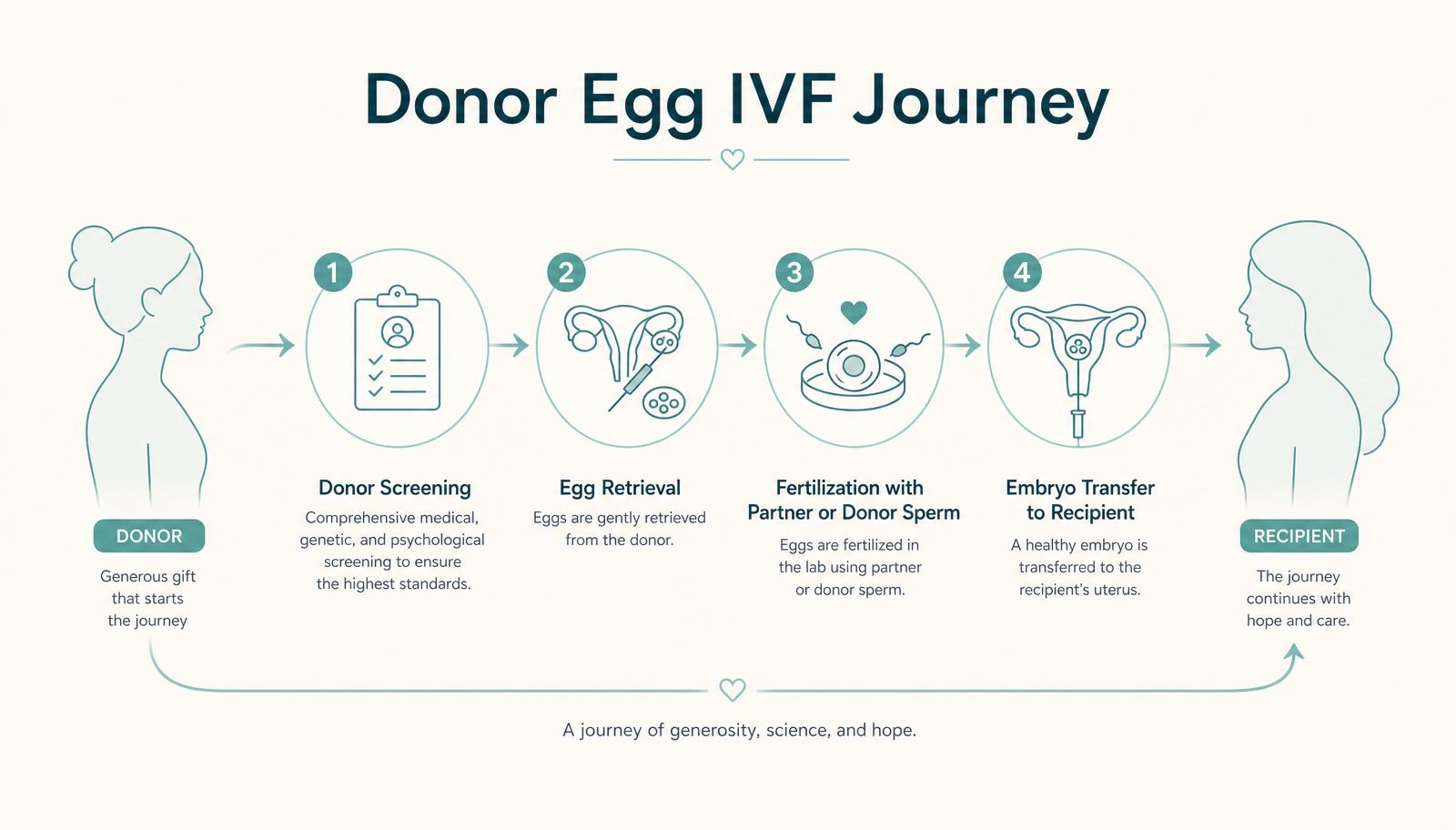
How Donors Are Screened
- Medical and family history.
- Infectious disease testing.
- Genetic carrier screening.
- Ovarian reserve and reproductive health evaluation.
- Psychological evaluation and informed consent.
The Recipient Process
- Recipient evaluation and uterine preparation.
- Donor matching according to agreed criteria.
- Synchronization or use of frozen donor eggs.
- Fertilization in the laboratory, typically with ICSI.
- Embryo transfer and pregnancy test approximately two weeks later.
Legal and Ethical Considerations
Donation may be anonymous or non-anonymous depending on clinic policy and recipient preference. Parentage rules vary internationally; confirm legal arrangements relevant to your home country.
Outcomes
Donor egg cycles often follow the donor's age statistical profile, but outcomes still depend on uterine receptivity, sperm quality, embryo quality, and other factors. No treatment guarantees pregnancy or live birth.